
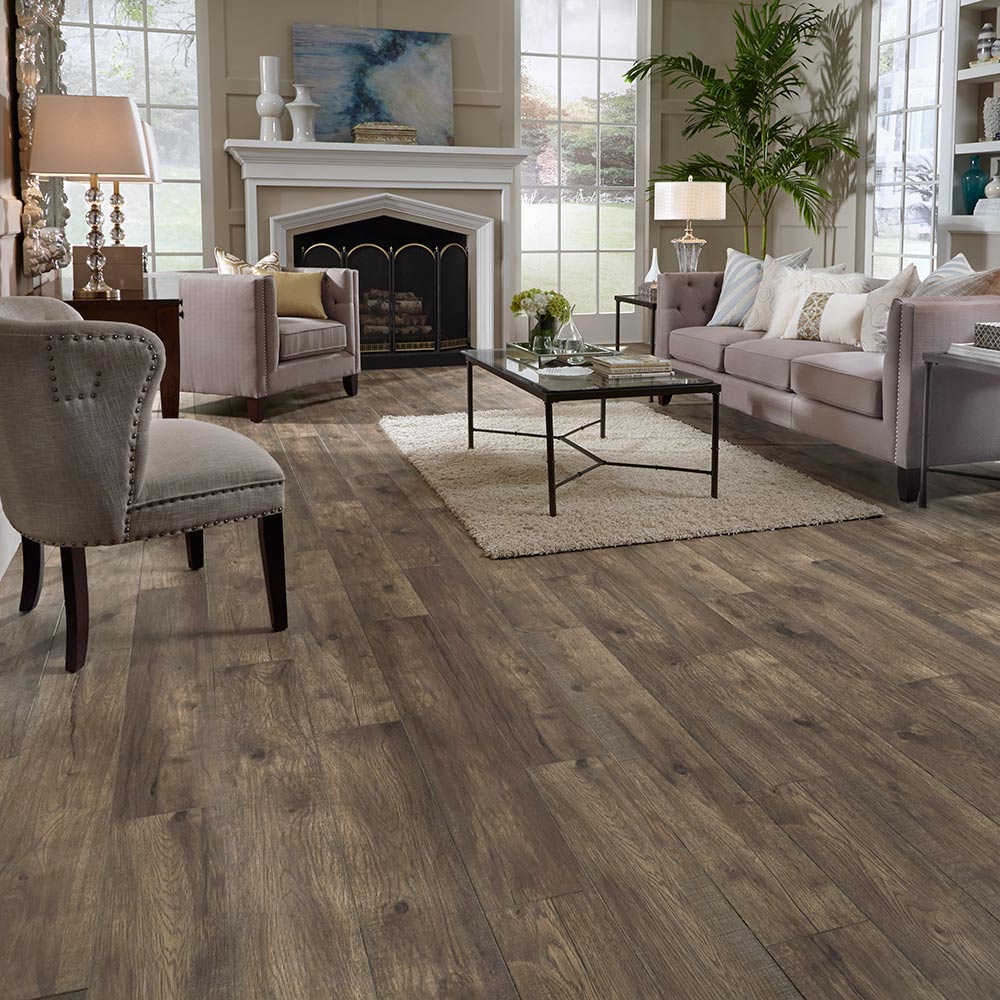
The short answer: Luxury vinyl plank (LVP) can perform well in Arizona homes and rentals when it is chosen and installed with heat in mind. The keys are acclimating the product before installation, leaving the manufacturer’s recommended expansion gaps, preparing a flat subfloor, managing direct sun exposure, and following the product’s temperature guidelines. Most LVP problems in hot climates trace back to installation shortcuts or extreme, prolonged heat rather than the material itself.
Here is what Arizona homeowners, property managers and realtors should know.
Why Heat Matters for Vinyl Flooring
Vinyl is a type of plastic, and like most materials it expands when warm and contracts when cool. In Arizona, floors can experience large temperature swings, especially near sliding glass doors, large windows, and in homes or vacant rentals where the air conditioning is turned off.
When LVP does not have room to move, that expansion can lead to:
- Buckling or peaking, where planks push up at the seams
- Gapping, where seams open as planks contract
- Separation at the click joints
The good news is that each of these issues can usually be prevented with proper product selection and installation.
Types of LVP and How They Handle Heat
Not all luxury vinyl is built the same way. Common types include:
Flexible LVP (glue-down or loose-lay)
Thinner, flexible planks that are glued to the subfloor or held in place by friction. Glue-down installation can limit movement because the planks are adhered to the floor. Adhesive selection and subfloor prep are important.
Rigid-core LVP (SPC and WPC)
Rigid-core products have a stiff core layer that improves dimensional stability.
- SPC (stone plastic composite) has a dense, mineral-based core and is often marketed for stability in temperature changes.
- WPC (wood plastic composite) has a foamed core that can feel softer and quieter underfoot.
Rigid-core click-lock products are usually installed as floating floors, which means expansion gaps are essential.
Whatever type you choose, read the manufacturer’s installation guide for temperature ranges and sun exposure recommendations. These vary by product and can affect warranty coverage.
Installation Steps That Matter Most in Arizona
1. Acclimation
Many manufacturers recommend letting LVP sit in the room where it will be installed, with the air conditioning running at normal living temperatures, for a set period before installation. Some rigid-core products may require less acclimation than others. Follow the specific product’s instructions.
2. Expansion gaps
Floating LVP needs a gap around the perimeter of the room and around fixed objects such as kitchen islands, pipes and door frames. Baseboards and trim cover the gap. Skipping or shrinking this gap is one of the most common causes of buckling in hot climates.
3. Transitions for large areas
Many products have maximum run lengths before a transition strip is required. Long, open floor plans may need transitions in doorways or between large areas to allow for movement.
4. Subfloor preparation
LVP needs a flat, clean, dry subfloor. In the Phoenix area, many homes sit on concrete slabs. Slabs should be checked for high and low spots and for moisture. Uneven subfloors can cause click joints to flex and fail over time.
5. Don’t pin the floor down
Floating floors should not be fastened under heavy fixed items such as kitchen islands or built-in cabinets, unless the manufacturer allows it. Pinning prevents the floor from moving and can cause problems elsewhere in the room.
Sun Exposure: The Arizona Factor
Direct sunlight through windows and doors can heat the floor surface well above room temperature. Over time, intense UV exposure can also cause some flooring to fade.
Ways to reduce sun-related issues:
- Use window coverings, shades or UV-filtering window film on large south- and west-facing windows
- Choose products the manufacturer rates for areas with sun exposure
- Consider glue-down installation or tile in areas with intense direct sun, such as sunrooms or in front of large sliding doors
- Avoid installing standard LVP in rooms that are not climate controlled, such as enclosed patios or garages, unless the product is rated for it
Vacant Homes and Rentals
Property managers and sellers should pay special attention to vacant properties. A home with the air conditioning turned off during summer can reach temperatures above what many LVP products are designed to handle. Check the manufacturer’s maximum temperature recommendation and keep vacant units at a reasonable setting when LVP is installed.
Durability: What LVP Does Well
When installed correctly, LVP offers practical advantages for Arizona properties:
- Water resistance on the surface, suitable for kitchens, baths and laundry areas
- Scratch and scuff resistance, depending on wear layer thickness
- Comfort underfoot, often warmer and softer than tile
- Easy cleaning with a vacuum and damp mop
- Plank replacement is often possible with click-lock products
Choosing for durability: Ask about wear layer thickness, core type and whether the product is rated for heavy residential or light commercial use. Rentals and high-traffic homes generally benefit from thicker wear layers.
Care Tips for LVP in Arizona
- Sweep or vacuum regularly; desert dust and grit act like sandpaper
- Use doormats at entries
- Use felt pads under furniture legs
- Clean with manufacturer-approved cleaners; avoid steam mops unless approved
- Lift, do not drag, heavy furniture and appliances
- Keep indoor temperatures within the manufacturer’s recommended range
LVP vs. Tile in Arizona
Tile is not affected by heat the way vinyl can be, which is why it has been a long-time Arizona staple. LVP is often warmer and softer underfoot and quicker to install. Many homes use both: tile or wood-look tile in sunny areas and entries, and LVP in living spaces and bedrooms.
Frequently Asked Questions
Does LVP buckle in Arizona heat?
LVP can buckle if it is installed without proper expansion gaps, is not acclimated, or is exposed to extreme heat beyond the manufacturer’s guidelines. When installed correctly and kept in a climate-controlled space, LVP can perform well in Arizona.
What is the expansion gap for luxury vinyl plank?
Expansion gap requirements vary by product. Check the manufacturer’s installation instructions. The gap is usually left at walls and fixed objects and covered by baseboards or trim.
Is SPC or WPC better for hot climates?
SPC’s dense core is often promoted for dimensional stability with temperature changes, while WPC can feel softer underfoot. Product quality and correct installation matter more than core type alone, so compare manufacturer specifications.
Can LVP be installed in a sunroom or near large windows?
It depends on the product. Some manufacturers limit installation in areas with intense direct sun or without climate control. Window coverings, glue-down installation or tile may be better choices for those spaces.
Get LVP Installed With Arizona Conditions in Mind
The Flooring Outlet in Chandler sells and installs luxury vinyl plank and tile across Maricopa and Pinal counties. We will help you choose a product suited to your space, sun exposure and use, with free estimates and professional installation.
The Flooring Outlet · 2700 S Gilbert Road, Suite 5, Chandler, AZ 85286 · Free estimates and professional installation across Maricopa and Pinal counties.